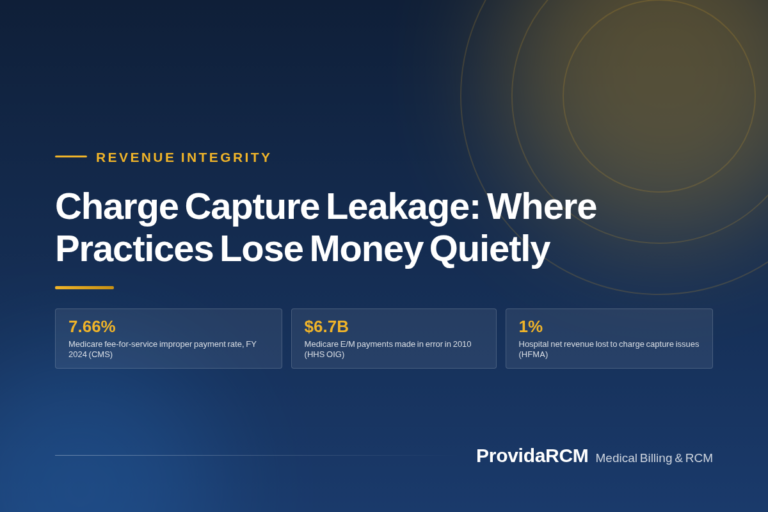
Charge Capture Leakage: Where Practices Lose Money Quietly
Denials announce themselves. Missed charges do not. Here is where care that was delivered stops short of a claim, and the reconciliation that catches each stop.

Denials announce themselves. Missed charges do not. Here is where care that was delivered stops short of a claim, and the reconciliation that catches each stop.
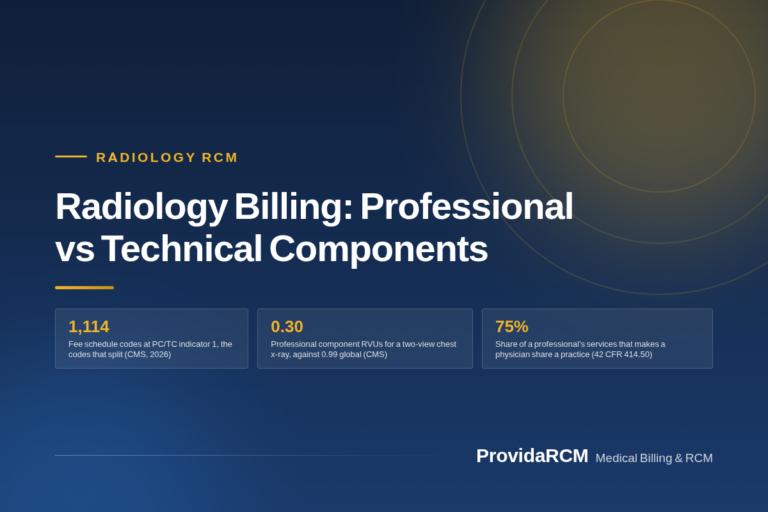
One imaging code, two payments. Here is what the professional and technical components actually cover, which modifier bills which half, how CMS decides which codes can split at all, and what the anti-markup rule does to a study you buy from an outside supplier.
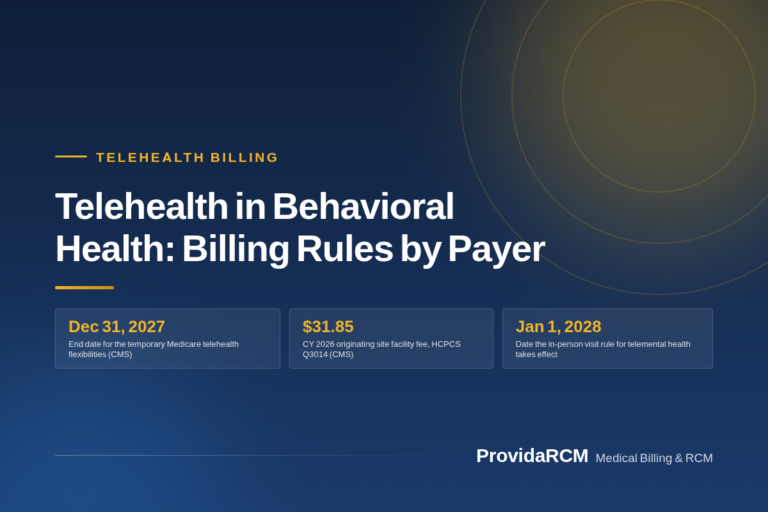
Medicare made the behavioral health telehealth basics permanent. The rest of the flexibilities run to the end of 2027. Here is how the place of service code, the modifier and the payer decide whether the visit pays.
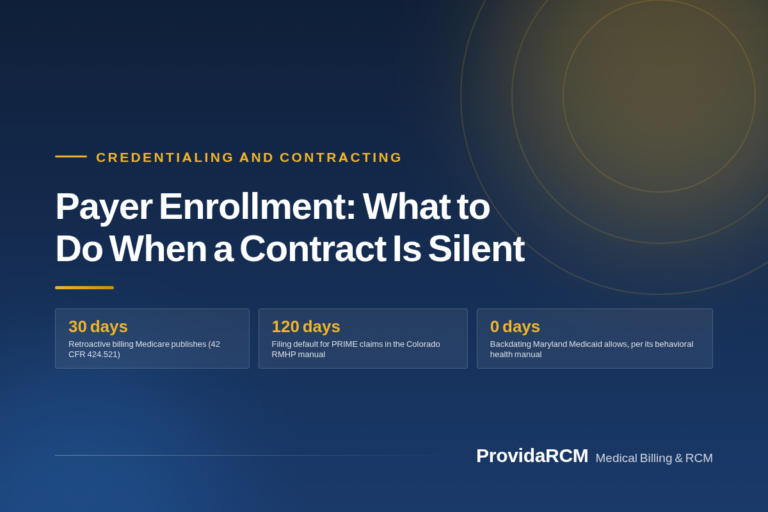
Credentialing approves the clinician. Contracting sets the money. Most of the questions your billing team asks live in a provider manual or a fee schedule addendum rather than in the contract, and when the contract is silent you have to ask in writing. Here is what to ask for, and what to do when no one answers.
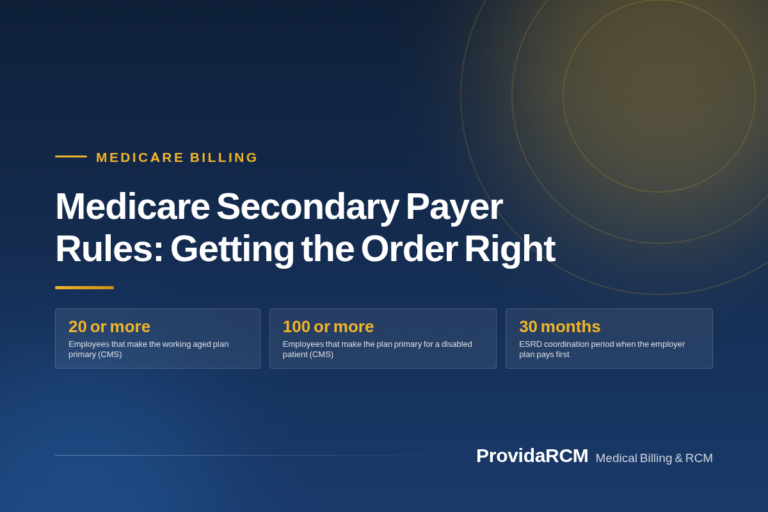
Medicare pays second only when the facts put it there. Here is how the working aged, disability, ESRD, no-fault, liability and workers' compensation situations are decided, and what happens when the order goes wrong.
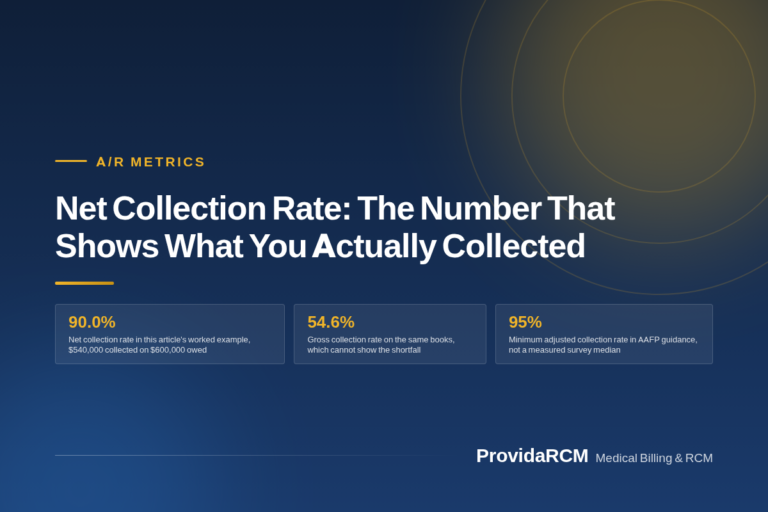
It is the one revenue cycle number that resists being dressed up, because the denominator only counts the dollars a payer contract said you could keep. Here is the formula, the three ways it goes wrong, and how to read it month to month.
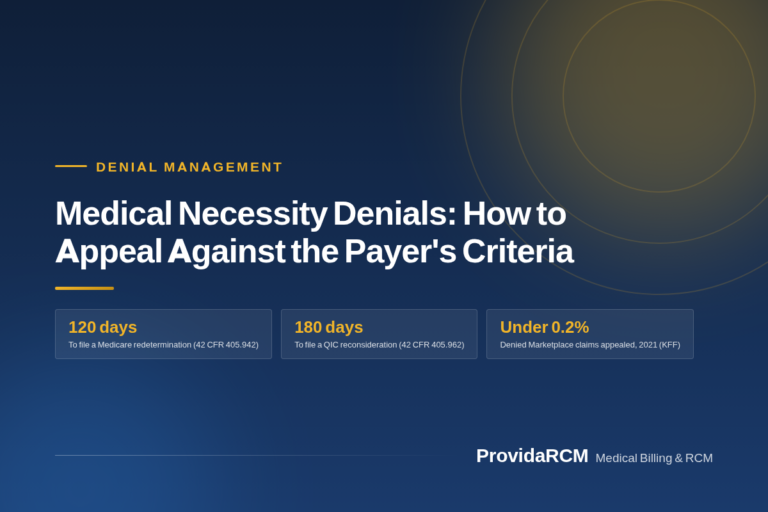
A medical necessity denial is the payer applying a rule to your record. Here is how to get that rule in writing, tie each element of it to a line in the chart, and file at the level that owns the decision.
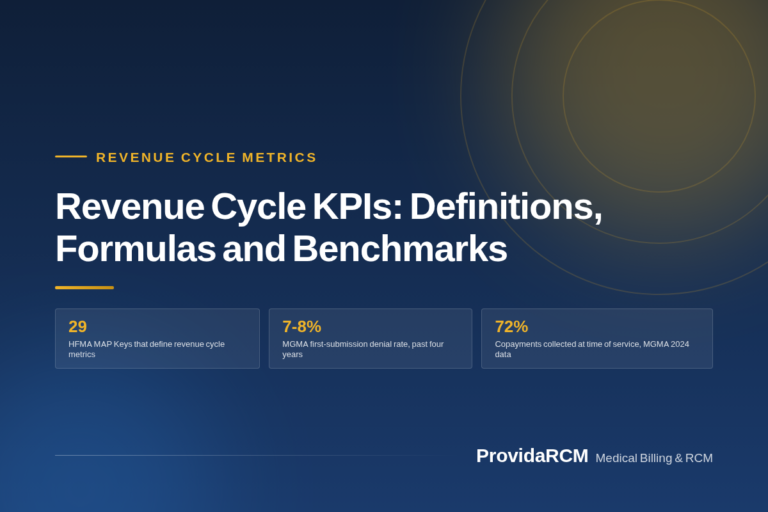
A working reference for the revenue cycle KPIs US practices report, with the formula in words, the mistake that makes each number misleading, and the organisation that owns every benchmark quoted.
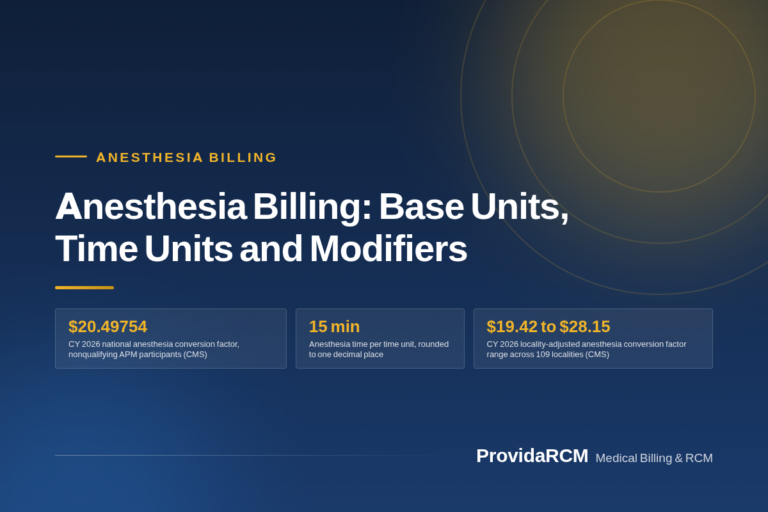
Anesthesia is not paid on RVUs. It is paid on the base units CMS publishes, time units counted one per 15 minutes, and a conversion factor that is republished every year. Here is where each number comes from and which modifiers decide the rate.