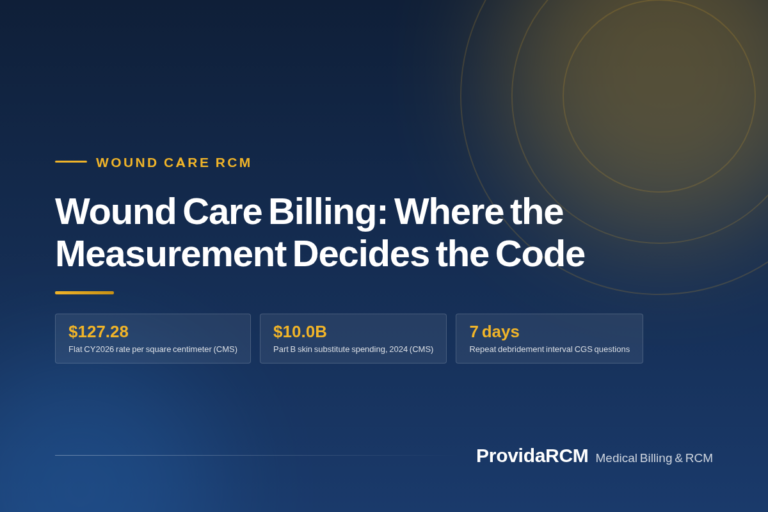
Wound Care Billing: Where the Measurement Decides the Code
Debridement, skin substitutes and the application codes are three separate payments decided by two measurements. Here is how Medicare pays each one in 2026, and the edits behind the denials.

Debridement, skin substitutes and the application codes are three separate payments decided by two measurements. Here is how Medicare pays each one in 2026, and the edits behind the denials.
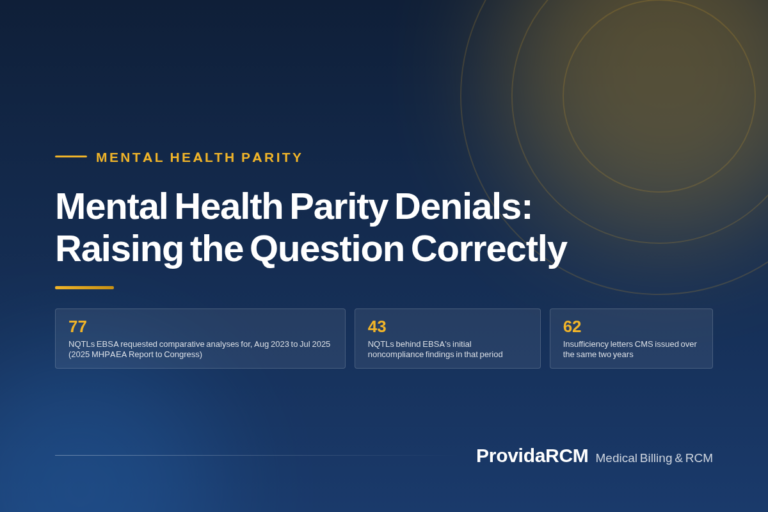
Parity compares how a plan runs the behavioral health benefit against how it runs medical care. Here is what a plan must produce when the question is asked, the signals that make a denial worth testing, and how to put it to a plan or a regulator without overclaiming.
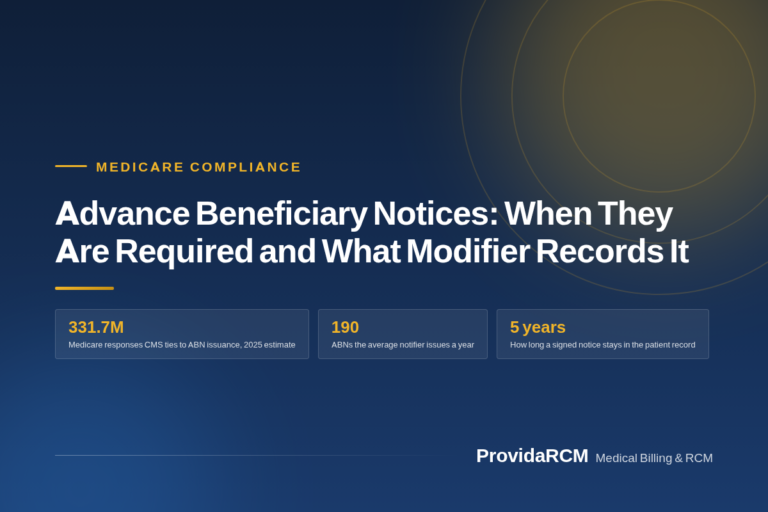
The notice is a one-page form with one decision inside it. Used on the right service and coded with the right modifier, it moves a denied charge to the patient. Missed, it moves the charge to you.

A 90-day AR cleanup is a project, not a pep talk. Here is how to pick the accounts, sequence them by deadline, name an owner for each, and write off what cannot be recovered.
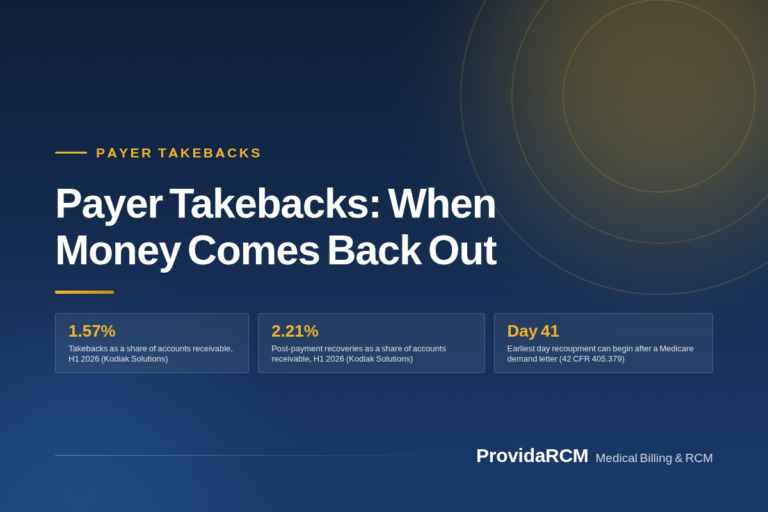
Denial rates fell again in 2026 while takebacks rose. Here is what a recoupment, an overpayment demand and a recovery auditor demand each let a payer do, and the Medicare windows that decide whether the money stays.
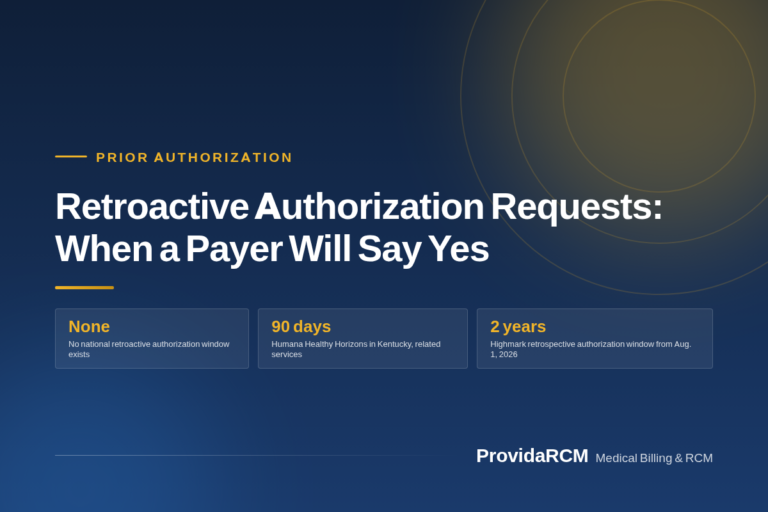
A retroactive authorization request asks a payer to review a service after it was furnished. Payers grant them for emergencies, for a service that could not be foreseen until the procedure was underway, for a patient who arrived without the information a check needs, and for retroactive eligibility. The window belongs to the payer.
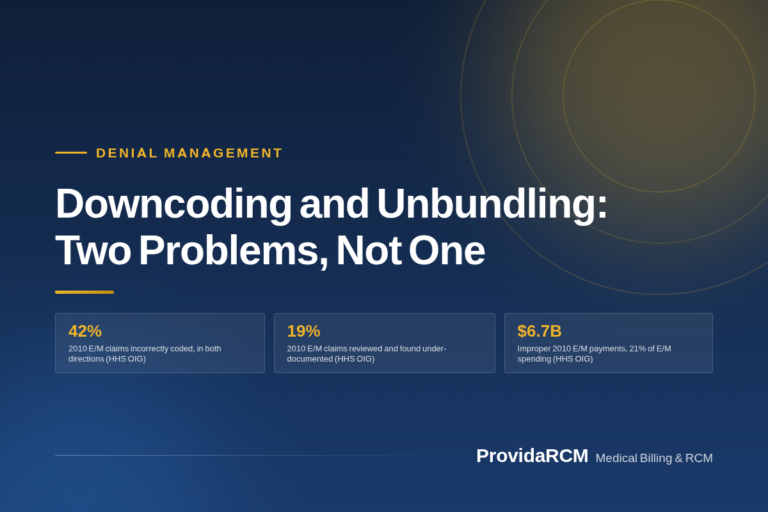
A smaller payment has more than one cause, and only one of them is answerable with the medical record. Here is how to tell a downcode from a contractual reduction, and how to tell an improper unbundle from a payer that folded two services into one allowance.
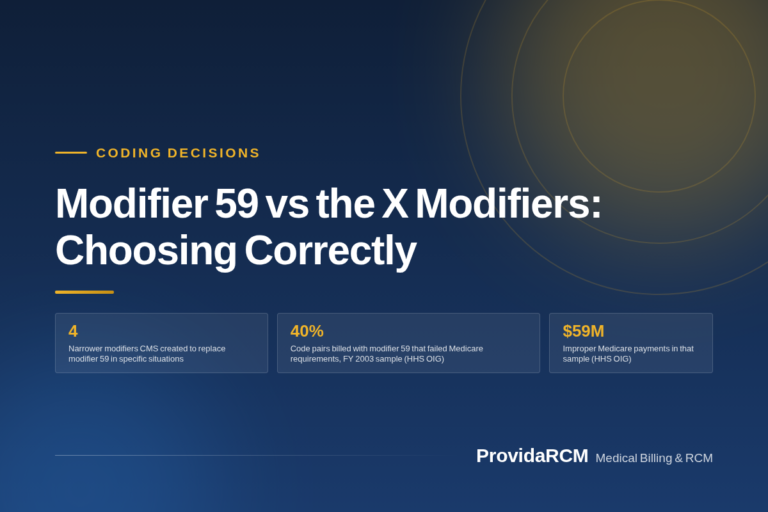
The X modifiers are not alternatives to modifier 59. CMS built them for four specific situations and told billers to use the narrower one whenever it fits. Here is how the decision works, front to back.
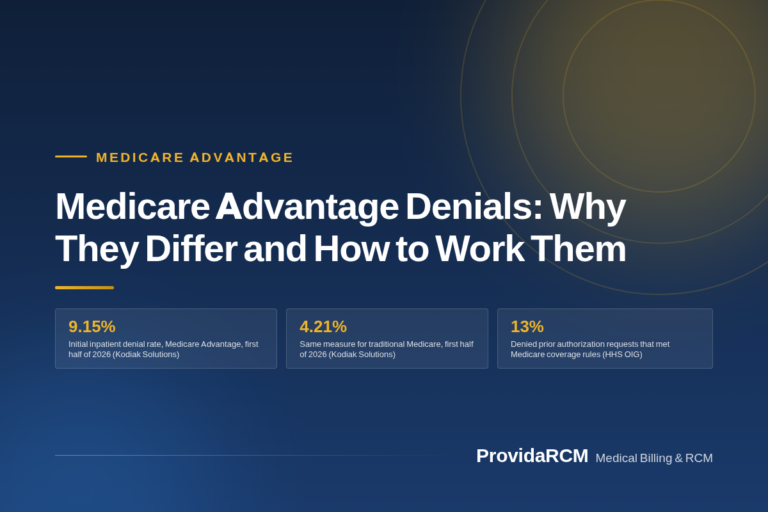
Medicare Advantage plans decide coverage first, apply their own published criteria where Medicare criteria are not fully established, and run an appeal ladder whose clocks do not match fee-for-service. Here is the level-by-level picture and the work that wins.